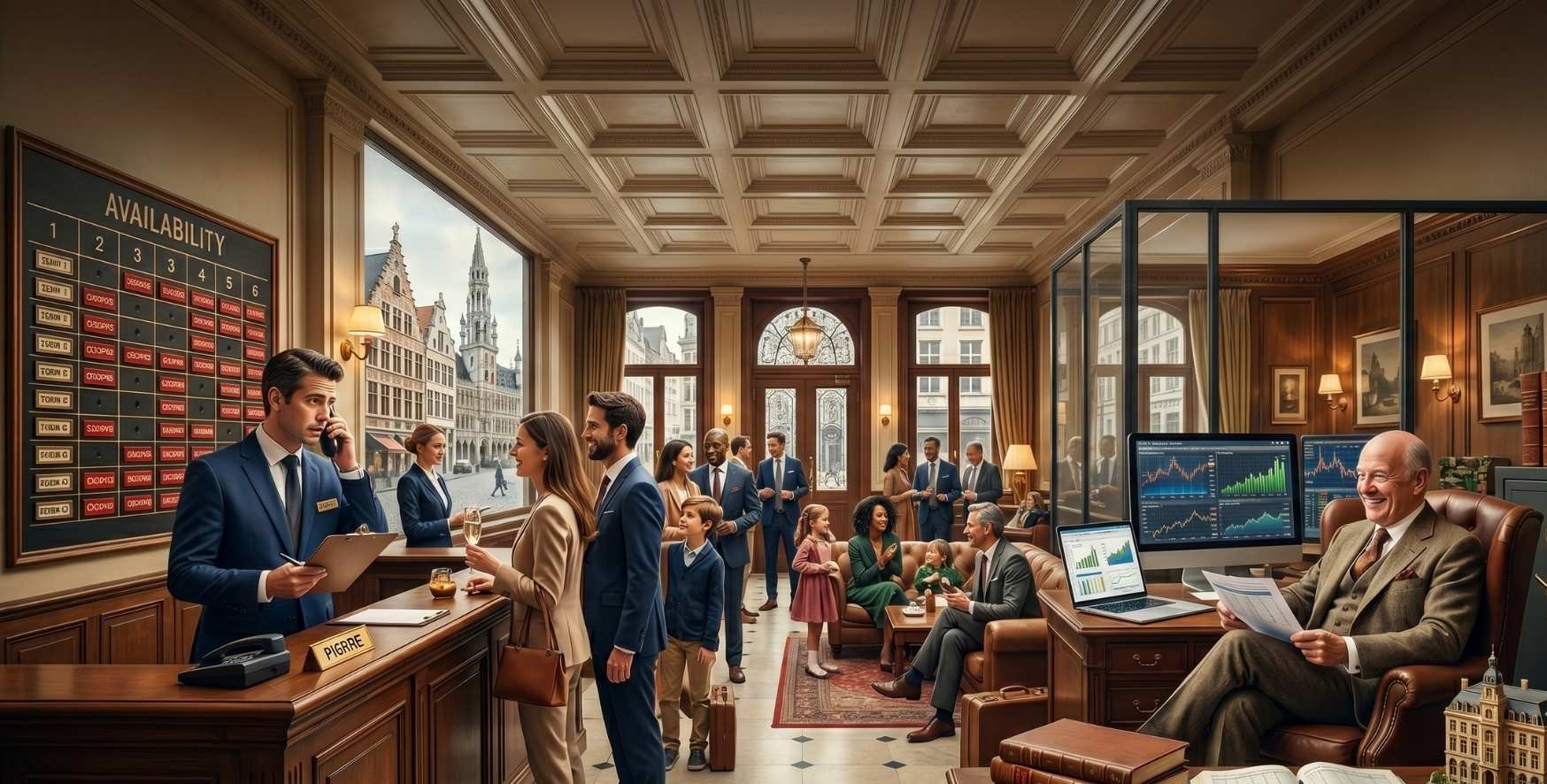
The art of cutting costs without cutting the guest experience
1
Energy management: Belgian energy costs have remained volatile since 2022. Smart thermostats, occupancy-based lighting, and systematic energy audits can reduce utility costs by 15–25% without any guest-facing impact.
2
Procurement consolidation: Belgian hotels with 30+ rooms often overpay for supplies simply due to fragmented purchasing. A consolidated supplier strategy — negotiated quarterly with volume commitments — reduces food and beverage costs and amenity spend meaningfully.
3
Labour scheduling optimisation: The biggest cost lever available to Belgian hotel managers. Aligning staff rosters with real demand patterns — not fixed weekly schedules — reduces unnecessary overtime and idle hours while maintaining service standards at peak periods.
4
Technology substitution: Self check-in kiosks, digital concierge tools, and automated housekeeping coordination software are no longer luxuries in Belgium's hotel sector. They reduce operational friction and free staff for the high-value, human-touch moments that guests actually remember.
5
OTA commission reduction: Every booking that comes through Booking.com or Expedia carries a 15–25% commission cost. A structured digital marketing strategy — Google Ads, Meta retargeting, email loyalty programmes — shifts bookings to direct channels, improving margin without affecting occupancy.
The trap many Belgian hotel managers fall into: cutting costs in ways that are invisible on the P&L but immediately visible to the guest. Cheaper toiletries, reduced housekeeping frequency, slower breakfast service. These decisions save hundreds of euros per month and destroy thousands in future bookings through negative reviews.
Guest satisfaction as a revenue strategy, not a service standard
In Belgian hospitality, guest satisfaction is no longer simply a measure of service quality — it is a digital marketing asset with direct financial implications. A hotel with a 4.7 average rating on Google and Booking.com occupies algorithmically better positions in search results, attracts more organic bookings, and commands higher average daily rates than an equivalent property rated 4.1.
The mathematical relationship is documented: a 0.5-star improvement in average guest rating correlates with a 6–11% increase in average daily rate across European hotel markets. In Belgium's competitive segments — Brussels business hotels, Bruges boutique properties, Ghent urban stays — this translates directly to tens of thousands of euros in additional annual revenue.
Guest satisfaction management in 2026 is therefore an active discipline with three components:
A
Proactive experience design: Identifying and systematically improving the three to five moments in a guest's stay that generate the strongest emotional impressions — arrival, the first night's sleep quality, breakfast, and departure. These "memory peaks" drive review scores disproportionately.
B
In-stay issue resolution: Belgian hotel managers who implement structured guest communication during a stay — a simple check-in message at hour four, a WhatsApp contact number for frictionless requests — catch and resolve complaints before they reach TripAdvisor or Google.
C
Post-stay review activation: A well-timed, personalised review request sent 24–48 hours after checkout generates significantly higher response rates than generic automated emails. Belgian hotels that systematically activate satisfied guests to leave reviews build rating momentum that compounds over months.
The general manager as digital marketing strategist
Here is where Belgian hotel management practice has evolved most significantly in recent years. The general manager who understands only operations — housekeeping rotations, F&B margins, maintenance schedules — is increasingly at a disadvantage compared to one who also understands the hotel's digital marketing ecosystem.
In Belgium, where the hospitality market spans leisure-driven cities like Bruges and Ghent, business-driven hubs like Brussels and Antwerp, and rural destinations in the Ardennes and Flemish countryside, the digital marketing strategy must reflect the specific demand patterns and guest profiles of each property.
A Brussels business hotel requires a digital marketing approach centred on corporate rate negotiation, LinkedIn-targeted advertising, and last-minute booking optimisation. A boutique property in Bruges needs Instagram-first visual storytelling, influencer partnerships with travel creators reaching the Belgian and Dutch markets, and SEO-driven content about the city's unique cultural calendar.
The common thread: the general manager who actively shapes their property's digital marketing strategy — working with or directing a specialist — generates materially better commercial outcomes than one who delegates it entirely or ignores it.