
In today’s hospitality industry, digital presence is often treated as a branding tool. Hotels invest time in posting beautiful photos, sharing occasional promotions, or maintaining social media activity.
However, many properties miss a much bigger opportunity.
Digital channels can function as a structured revenue support system — not just a marketing showcase.

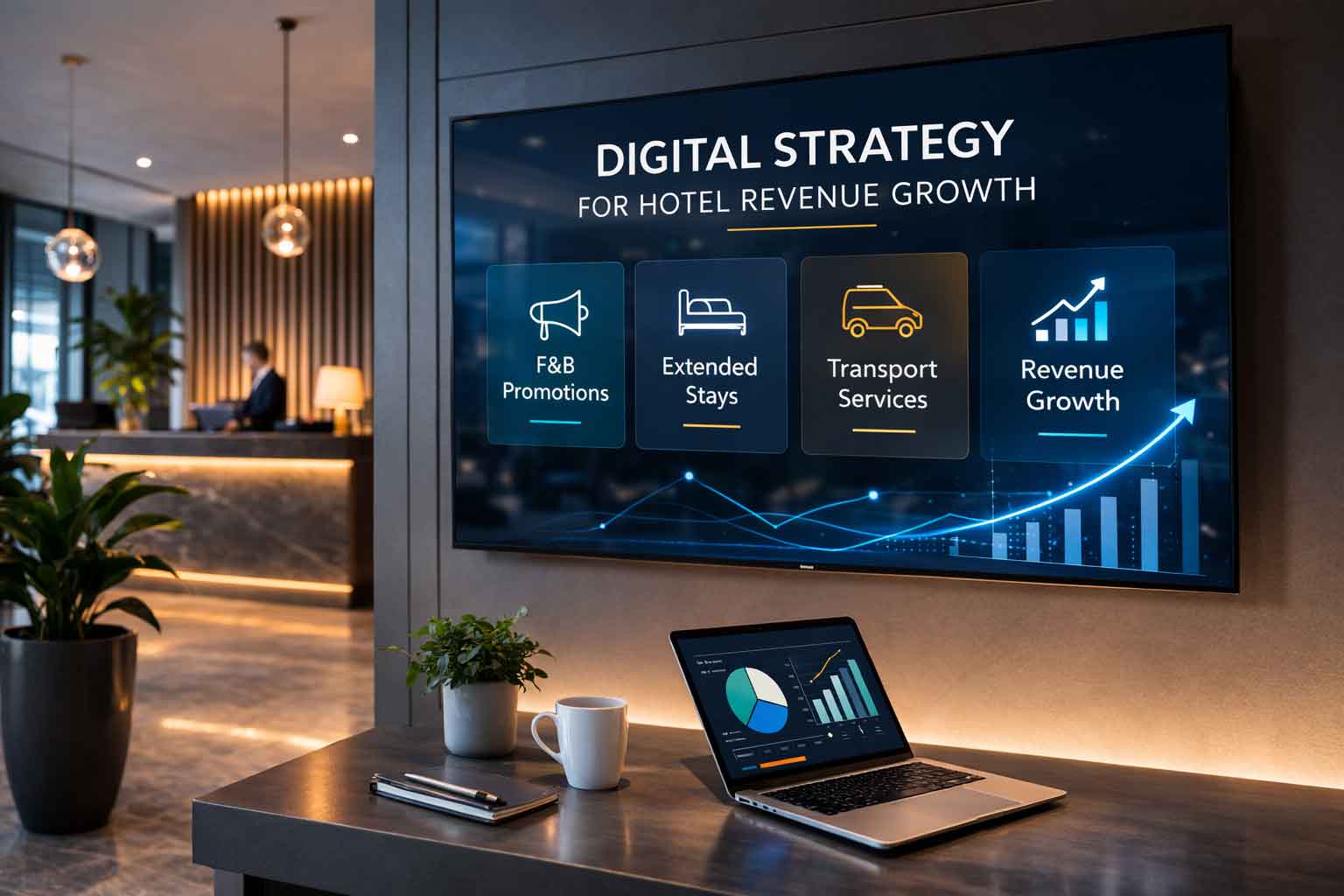
When digital positioning is aligned with operational revenue drivers such as food & beverage promotions, extended stays, transportation services, and weekend packages, the digital ecosystem becomes a direct contributor to property performance.
In many hotels, digital activity exists but lacks structure. Typical situations include: Social media posting without a clear communication framework Promotions that exist internally but are not amplified digitally Visual assets that are strong but underutilized online Revenue opportunities that are not communicated consistently When these elements remain disconnected, digital presence becomes passive instead of strategic. A structured digital approach can transform this.
The first step is identifying the operational revenue drivers within the property. These often include: Food & beverage promotions Long-stay packages Transportation services City experience packages Weekend offers Once these drivers are clearly identified, digital channels can be structured to communicate them consistently. This means digital content is no longer random. Instead, it follows a clear commercial purpose.
One of the biggest improvements hotels can implement is structured content planning. This includes: Weekly campaign communication Promotions should not be shared only once. They should be communicated repeatedly through structured weekly posts. Grid and visual alignment A consistent visual structure strengthens brand perception and improves recognition. Standardized caption tone Captions should follow a consistent communication style that reflects the property’s positioning. Structured content helps audiences clearly understand what the property offers.
Digital communication should not exist only online. In-property communication plays an equally important role. Screens, lobby visuals, or internal displays can communicate: transportation services local experiences F&B promotions extended stay benefits This creates a seamless connection between digital visibility and on-site guest experience. In other words, marketing and operations begin to support each other.
One concern many hotel management teams have is losing control of their digital channels. A well-structured system solves this by maintaining full transparency. For example: all content can be submitted for approval publishing can remain under hotel team control role-based access can be used instead of password sharing This approach protects institutional integrity while allowing digital strategy to evolve.
The success of a digital strategy should never be measured only by likes or followers. Instead, evaluation should focus on operational indicators such as: engagement growth visibility improvements content consistency clarity of revenue communication operational efficiency feedback When digital positioning is measured through these factors, it becomes a real business tool rather than just a marketing activity.
Hotels operate in a highly competitive environment where every additional revenue stream matters. Digital channels already reach thousands of potential guests every day. The real question is whether this visibility is being used strategically. When digital presence is structured around revenue communication, content consistency, and operational alignment, it becomes far more powerful.


If you would like to improve your digital presence and attract more guests, feel free to contact us for professional digital marketing support.
Hotels, restaurants, and healthcare brands ready to scale through structured digital strategy are invited to get in touch, along with businesses from other industries seeking measurable growth.
© 2026 ismailyildirim.be